
BEAD and multi-dwelling units.
Proving every unit is connected: what the program says about apartment buildings, and the evidence to keep for each unit.
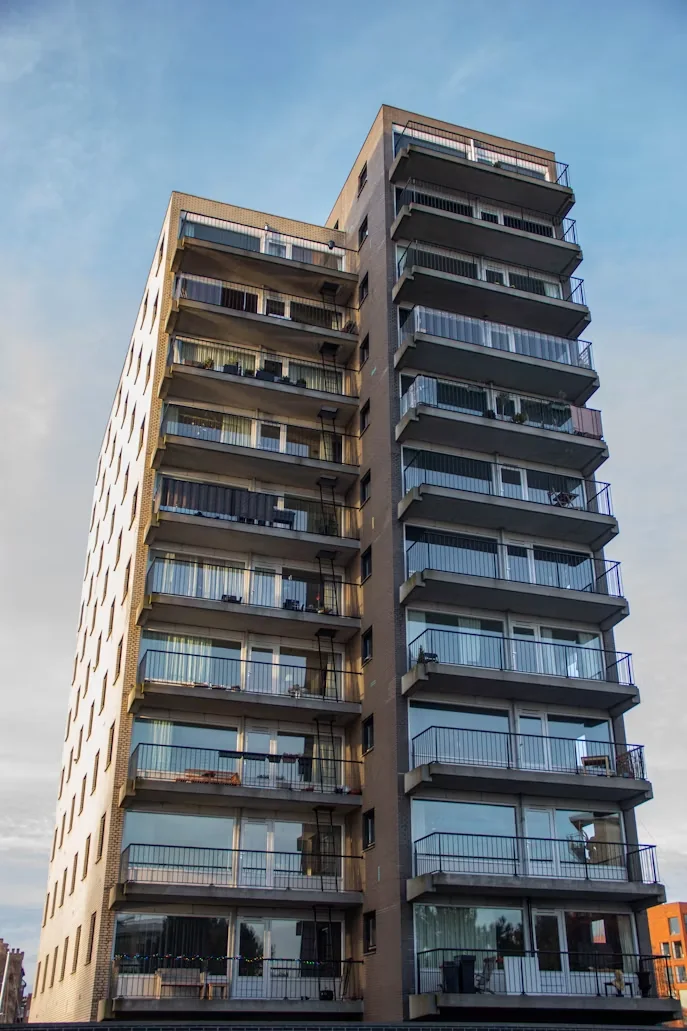
What BEAD requires for MDUs
The Broadband Equity, Access, and Deployment (BEAD) Program was created by the Infrastructure Investment and Jobs Act of 2021 and provides $42.45 billion to extend high-speed broadband across the United States. NTIA administers it through the states, territories and the District of Columbia, known as Eligible Entities, which select subgrantees to build (NTIA, BEAD Restructuring Policy Notice, June 2025).
BEAD works from the FCC's Broadband Serviceable Location Fabric, and a multi-dwelling unit (MDU) appears there as one Broadband Serviceable Location (BSL), however many apartments it contains. NTIA's challenge process policy notice is explicit about what that means:
- An Eligible Entity may allow a challenge to an MDU's classification on the basis that qualifying broadband service is not available to every unit in the MDU.
- A provider's claim that service is available can be rebutted if the service is not offered at the location, "including a unit of a multiple dwelling unit".
- An Eligible Entity may not reclassify a single MDU location as several locations.
- NTIA expects Eligible Entities and potential subgrantees to take the characteristics of MDU locations into account when selecting subgrantees.
In practice, a building counts as one location but is judged on every unit inside it. EducationSuperHighway puts it plainly: including unit-level connectivity for MDUs in BEAD subgranting is a stipulation of the program, not just a benefit.
The program's rules have changed since launch. NTIA's June 2025 restructuring notice replaced parts of the original notice of funding opportunity, removed the fibre preference and made subgrantee selection technology-neutral, with a new "Benefit of the Bargain" selection round. Check your state's current Final Proposal and subgrant agreement for the exact obligations that apply to your project.
Deployment options
The BEAD notice of funding opportunity lists eligible uses that include infrastructure for multi-tenant buildings and the deployment of internet and Wi-Fi infrastructure within an eligible multi-family residential building (EducationSuperHighway). Some states ask applicants to state which approach they will take for each MDU. The three options EducationSuperHighway cites from Wisconsin are:
- a wireline fibre connection to each unit;
- a connection to each unit using a non-fibre technology;
- a building-wide Wi-Fi installation available to all units.
Each option leaves a different trail. Fibre to each unit means a route, a termination and a test result per apartment. A building-wide system means coverage and access evidence for every unit rather than a single installation record.
Evidence to keep for every unit
Your state office sets the reporting requirements. As a working checklist, keep the following for each MDU:
For the building
- The BSL location ID and address as they appear on the Fabric, and your own project and job references.
- A unit list: every apartment number, confirmed on site rather than taken from a database.
- Property owner or manager contact, and a copy of the access or right-of-entry agreement.
- The deployment approach for the building: fibre to each unit, another technology, or building-wide Wi-Fi.
- The building entry point, riser or vertical route, and the location of each piece of in-building equipment.
- A dated plan of the in-building route, updated to match what was built.
For each unit
- Status: not started, in progress, complete, or blocked, with the reason if blocked (no access, refused, vacant).
- Date the service became available to the unit.
- Dated photos of the termination point or equipment in or serving the unit.
- Test results or speed checks where your state asks for them.
- A signed completion record where a customer is present.
- A record of every failed access attempt, with date and reason, so a gap can be explained.
At handover
- A completion report per building that lists every unit and its final status.
- Copies kept in a format you can hand to an auditor without rebuilding it from notes and spreadsheets.
Where Holoflow fits
Holoflow is a platform for planning and documenting fibre inside multi-dwelling buildings. Teams scan the building with a supported iPhone or iPad with LiDAR, plan risers, cabling and equipment in a browser-based 3D editor, and track every floor and unit with its own status and photos. Job lists come in from spreadsheets, custom fields hold your location IDs, and handover reports are generated in your own Word template with the customer's signature captured on site. Customer data is hosted in the UK and the EU today. Read more about Holoflow for BEAD projects.
Sources
- NTIA, BEAD Challenge Process Policy Notice
- NTIA, BEAD Restructuring Policy Notice (June 2025)
- EducationSuperHighway, Unit-level connectivity for MDUs
This guide is a plain-English summary, not legal or grant advice. Requirements vary by state and have changed during the program; check your subgrant agreement.
See how Holoflow works.
Book a 30-minute walkthrough of a real building survey, plan and handover report. Bring your questions and tell us how your team works.
Book a demo